

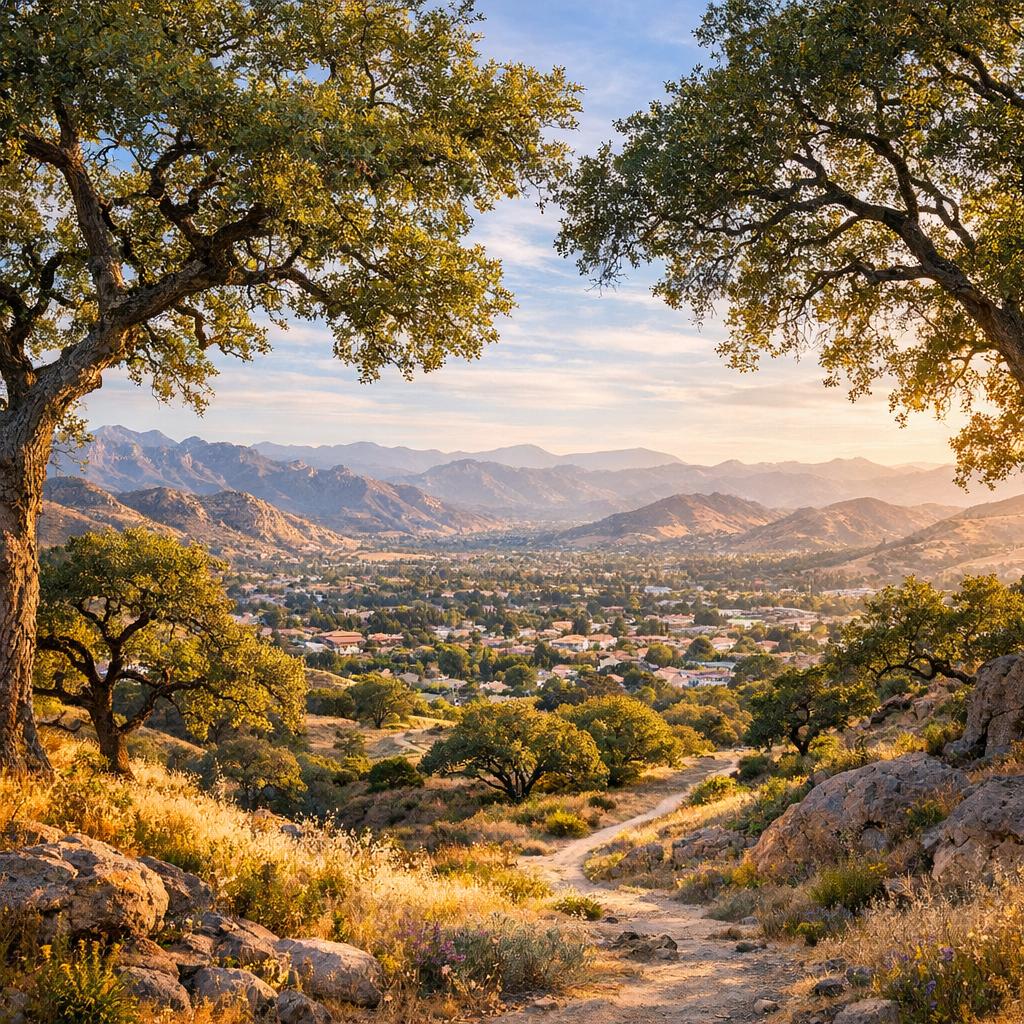
Thousand Oaks, nestled in the heart of the Conejo Valley, is a city steeped in history and cultural heritage. From its early days as home to the Chumash Native Americans to its development into a vibrant community, our city offers a tapestry of stories that continue to shape our identity.
Chumash Heritage
Long before European settlers arrived, the Chumash people thrived in this region, leaving behind a legacy that includes ancient cave paintings and artifacts. Their deep connection to the land is a testament to the rich cultural foundation upon which Thousand Oaks is built.
Spanish Land Grants and Early Settlers
In the early 1800s, Spanish land grants transformed the area, leading to the establishment of ranchos and the arrival of settlers who began to cultivate the land. This period marked the beginning of agricultural development that would define the region for decades.
Jungleland and Hollywood’s Influence
By the 1920s, Thousand Oaks became a hub for entertainment with attractions like Goebel’s Lion Farm, later known as Jungleland. This exotic animal park not only drew tourists but also served as a filming location for Hollywood productions, embedding the city into the fabric of the film industry.
Preserving Our Natural Beauty
Today, Thousand Oaks is renowned for its commitment to preserving natural spaces. With over 15,000 acres of designated open space and more than 75 miles of trails, residents and visitors alike can enjoy the same scenic beauty that has been cherished for generations.
Understanding and embracing our city’s history enriches our appreciation for the community we call home. By honoring our past, we can continue to build a future that reflects the values and spirit of Thousand Oaks.